Licensed Washington 01 electrical contractors specializing in high-speed Level 2 EV charging for North Indian Trail suburban homes. Expert installations for attached 2- and 3-car garages, finished ceiling conduit runs, 200A service evaluations, and Avista $1,000 rebate compliance across Meadowglen Park, Pacific Park, and W. Barnes Road.
Occupying the scenic bluffs overlooking Nine Mile Road and extending north toward the Little Spokane River, North Indian Trail is one of Spokane's premier suburban neighborhoods. Platted and built primarily between the 1970s and 2000s, homes here feature attached two- and three-car garages, finished daylight basements, and modern 200-amp electrical panels. However, long cable runs between opposite ends of large floor plans, finished sheetrock ceilings, and cold wind exposure on the bluff demand skilled electrical engineering.
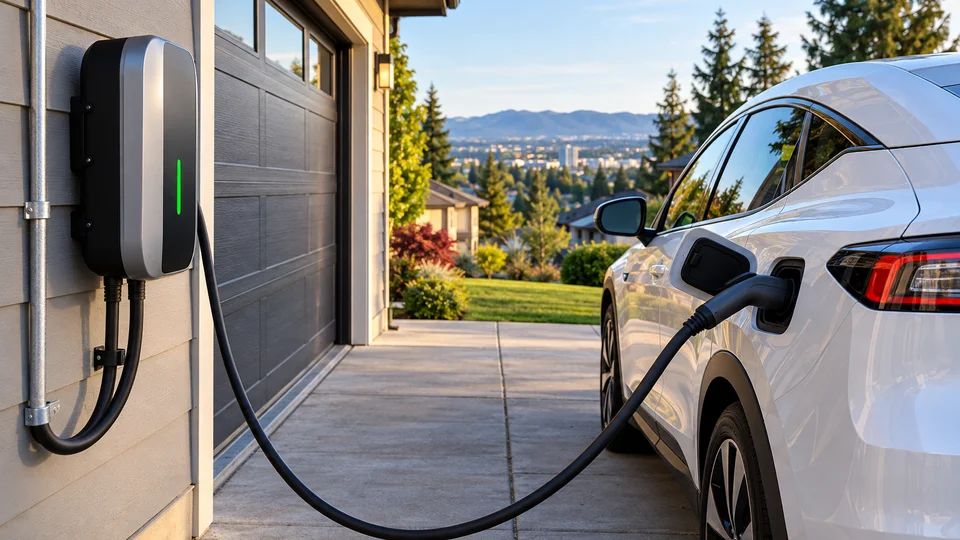
Adds 38 to 44 miles of driving range per hour of overnight home charging on a dedicated 60A breaker.
Specialized routing for finished garages, attic framing, and multi-bay parking stalls across North Indian Trail.
Engineered for winter battery preconditioning and sub-zero temperatures along the Little Spokane river corridor.
Complete documentation and licensed invoice support for qualifying Wi-Fi connected smart EVSE under Schedule 77.
Installing an EV charging station in North Indian Trail presents a distinctly different set of electrical factors than Spokane's older historic streetcar suburbs. Unlike the 100-amp overhead drops of older neighborhoods, most North Indian Trail homes have underground utility feeds and 200-amp service panels. However, the physical distance between the main panel and the desired vehicle parking bay is frequently substantial.
When homes feature basement electrical panels on the western side of the house and three-car garages on the eastern perimeter along North Indian Trail Road or West Barnes Road, circuit runs can easily exceed 60 to 90 feet. At continuous 48-amp charging loads, proper wire gauge selection is critical under National Electrical Code (NEC) Article 215/310 to prevent noticeable voltage drop, wasted energy, and equipment overheating.
The City of Spokane officially defines North Indian Trail by the Little Spokane River to the north, the steep cliffs above Nine Mile Road to the west, the western rim of Five Mile Prairie to the east, and the northern boundary of the former landfill to the south. Our licensed electricians provide rapid, permitted service across this entire bluff corridor.
Additionally, because North Indian Trail sits elevated above the Spokane River valley, winter storms and frigid winds produce severe thermal demands on EV batteries. Having a robust, hardwired 48-amp EVSE in an attached garage ensures full power is delivered for scheduled cabin and battery preconditioning before your morning commute down Indian Trail Road.
From multi-level contemporary homes near Pacific Park to newer subdivisions border-lining Meadowglen Park and W. Barnes Road, our electricians match circuit topology to your home's exact layout.
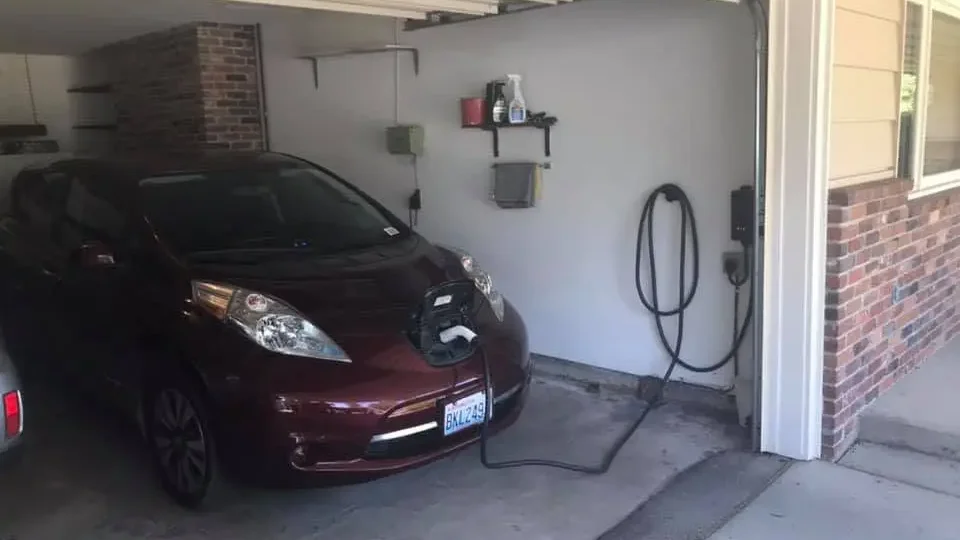
Popular in North Indian Trail builds from the 1980s through 2000s. The electrical service panel is often located in an unfinished basement utility room or adjacent garage wall. We route commercial metal-clad (MC) cable or sleek electrical metallic tubing (EMT) across joist spaces, avoiding sheetrock destruction while establishing a clean, code-compliant finish.
In sprawling ranch and split-level homes, the electrical meter and panel may sit 75 to 100 feet away from the third garage bay. Our electricians perform precise voltage drop calculations under NEC Article 215. When runs exceed 70 feet, we upsize conductors to #4 AWG copper to maintain clean voltage and prevent charger throttling.
Properties along the rim often feature detached hobby shops or RV bays. Per NEC 225.30 (single feeder rule) and NEC 250.32, we install code-mandated 4-wire subpanels with dedicated grounding electrode systems (dual 8-foot ground rods spaced 6 feet apart) rather than running illegal multi-branch circuits.
Many North Indian Trail households operate two electric vehicles (such as a Tesla Model Y and a Rivian R1T or Ford F-150 Lightning). Rather than spending $4,000+ to upgrade to a 400A utility service, we install smart dual chargers with power-sharing capabilities that dynamically divide an 80A or 60A feed between both vehicles.
Several North Indian Trail subdivisions are governed by Homeowners Associations (HOAs) with strict rules regarding visible exterior conduit and equipment placement. Under Washington State law (RCW 64.38.060), HOAs cannot prohibit EV charger installations, but they can enforce reasonable aesthetic guidelines. We design installations that conceal conduit inside walls or color-match exposed EMT to garage trim.
Understanding the performance differences between standard 120V trickle charging, plug-in NEMA 14-50 receptacles, and hardwired commercial-grade EVSE units.
| Charging Method | Circuit & Breaker | Continuous Amps | Power Output | Miles Added / Hour | Best Suited For |
|---|---|---|---|---|---|
| Standard Level 1 (120V) | 120V / 15A or 20A Dedicated | 12A Continuous | 1.4 kW | 3 – 5 Miles | Emergency backup; plug-in hybrids (PHEVs) with tiny batteries. |
| NEMA 14-50 Plug-In | 240V / 50A Breaker (GFCI Req) | 40A Continuous | 9.6 kW | 30 – 34 Miles | Portable mobile connectors; non-permanent installs. Requires industrial Hubbell receptacle. |
| Hardwired Level 2 RECOMMENDED | 240V / 60A Dedicated Breaker | 48A Continuous | 11.5 kW | 38 – 44 Miles | North Indian Trail standard. Fast overnight turnaround, cold weather preconditioning, no nuisance GFCI trips. |
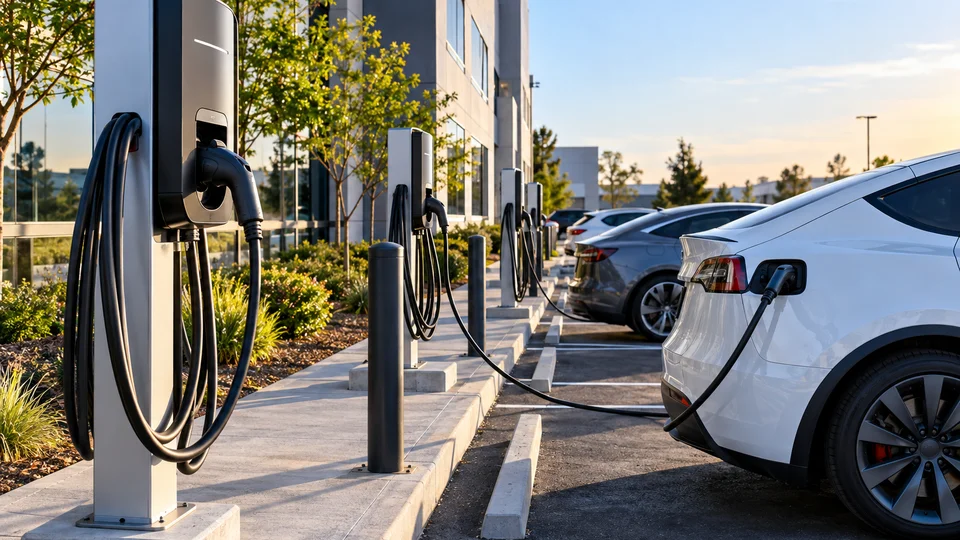
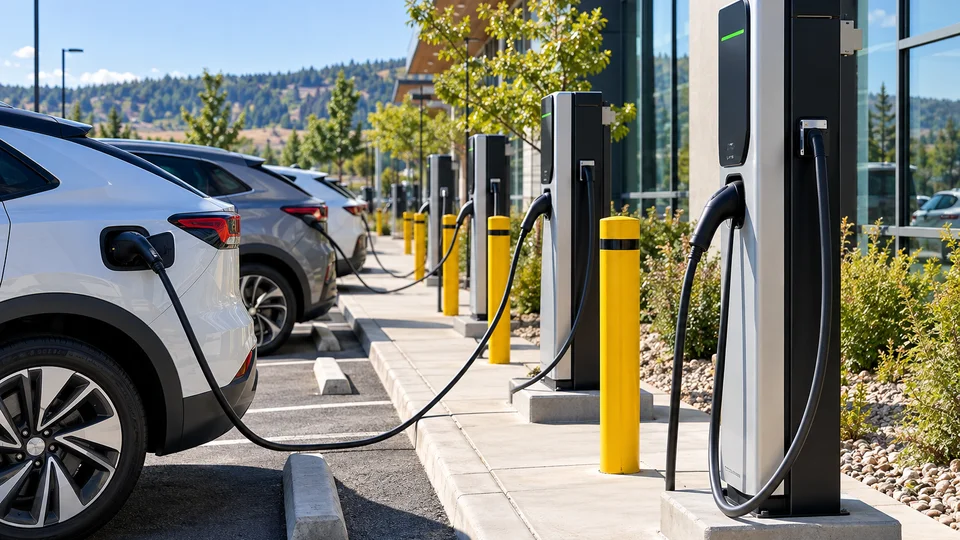
| Commercial Dual EVSE | 240V / 80A Shared or Subpanel | 64A Dynamic Load | 15.4 kW Shared | Varies (Auto-Split) | Multi-EV households, fleet vehicles, and rental accessory dwelling units (ADUs). |
Direct copper terminal terminations eliminate plug tension loss, thermal cycling fatigue, and melting risks associated with budget builder-grade outlets.
Hardwired EVSE units comply with NEC 210.8 without requiring a redundant GFCI breaker on the panel, preventing unexpected 2:00 AM charging interruptions.
An 11.5kW hardwired feed powers vehicle thermal heating elements directly from grid power rather than draining precious battery pack range before departing.
Before any breaker is seated in your electrical panel, Spokane EV Charging Specialists performs a thorough load calculation under NEC Article 220. In suburban North Indian Trail, many homes feature central air conditioning, electric ranges, microwave circuits, electric dryers, and finished basement baseboard or heat pump systems.
Even on a 200-amp main breaker, adding a continuous 48-amp EVSE (which counts as 60A under the NEC 80% continuous duty rule, NEC Article 625) can push nominal peak demand toward service thresholds during extreme heatwaves or sub-zero winter spells.
Our master electricians evaluate your main busbar rating, incoming service conductors, and existing circuit distribution. If service headroom is tight, we present smart alternatives:
Every installation conducted by Spokane EV Charging Specialists is 100% permitted with City of Spokane Development Services and fully eligible for regional utility incentives.
North Indian Trail is within the corporate city limits of Spokane (Spokane City Council District 3). All 240-volt circuit additions require a formal electrical permit issued by the City of Spokane Development Services Center.
Unpermitted EV charger installations can void manufacturer warranties, violate homeowner insurance coverage in the event of an electrical fire, and cause red-flag title issues when selling your property. As a licensed Washington 01 electrical contractor, we pull permits digitally, complete the installation, and guide the city electrical inspector to sign off on an official green tag.
Avista Utilities offers residential rebates of up to $1,000 for qualifying smart Level 2 EV chargers installed by licensed contractors under Electric Schedule 77. To qualify, your EVSE must be a certified smart, Wi-Fi connected model (such as ChargePoint Home Flex or Emporia) capable of participating in off-peak grid management.
We provide you with an itemized, code-compliant contractor invoice and assist you with filing the online rebate documentation so your cash rebate is processed smoothly.
From your initial quote to the final green tag inspection, our licensed electricians handle every step with professional precision.
We evaluate your main panel photo, calculate current volt-ampere demand under NEC Article 220, and recommend optimal charger hardware.
You receive an itemized proposal covering labor, conduit, copper wire, dedicated breaker, City of Spokane permit fees, and warranty.
We pull the official City of Spokane electrical permit with Development Services prior to commencing any physical electrical work.
We mount the EVSE, install heavy-gauge copper wiring, secure commercial conduit runs, and seat a dedicated two-pole breaker in your panel.
We test voltage under load, calibrate torque to manufacturer specs, configure Wi-Fi app settings, and verify charging at 48 continuous amps.
The City electrical inspector issues an official green tag pass. We provide final documentation and assistance for your $1,000 Avista rebate.
Straightforward, expert answers regarding residential electrical codes, cold-weather charging, garage layouts, and utility incentives.
Our licensed electrical contractors provide dedicated residential and commercial Level 2 EV charging solutions across the entire Inland Northwest.