📞 (509) 800-4136
• LICENSED WASHINGTON (01) ELECTRICAL CONTRACTORS

Home EV Charger Installation Spokane WA

The Definitive Guide to Level 2 Residential EV Charging. 32A to 48A Continuous Power, NEC 220 Load Auditing, Avista Rebates & Sub-Zero Winter Reliability.

  • ✓
    High-Speed 240V Level 2 Charging: 25 to 46 miles of range per hour—fully replenishing your battery in 6 to 9 hours overnight.
  • ✓
    NEC Article 220 Load Studies: Whole-home capacity audits confirming service safety for 60A/48A continuous duty EV circuits.
  • ✓
    Avista Schedule 77 Rebate Ready: Capturing up to $500 to $1,000 in qualifying smart connected residential charging incentives.
  • ✓
    Turnkey Municipal Permitting: Full City of Spokane, Spokane Valley, and WA L&I permit filing with 100% inspection pass guarantee.
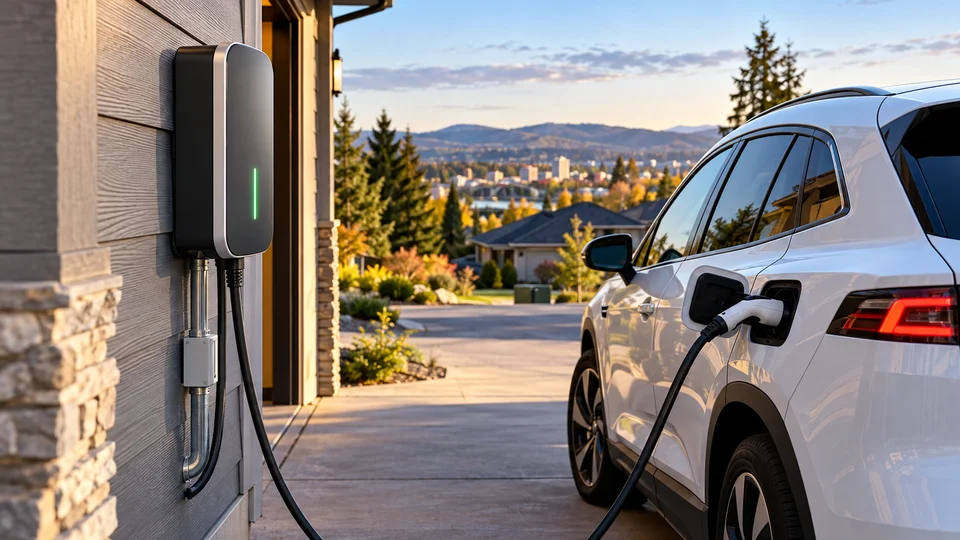
Licensed electrician installing home Level 2 EV charging station in Spokane WA garage
● Avista Rebate Ready · Up to $1,000 Off

Get a Fast Home EV Charger Quote

Schedule an in-home electrical panel audit, conduit routing review, and itemized estimate.
⚡ Washington (01) Electrical Contractor Lic #EC-SPOKEV*821JA
🛡️ City of Spokane & WA L&I Permitted & Inspected
💰 Avista Schedule 77 Rebate Certified ($500–$1,000)
❄️ Sub-Zero Winter Preconditioning & Cold-Rated Hardware
40-46 mph
48A Hardwired Level 2 Charging Speed
6-9 Hrs
Full 0% to 100% Overnight Charge Time
125%
NEC 625 Continuous Circuit Overcurrent Sizing
Up to $1,000
Avista Utilities Schedule 77 Cash Rebate

The Definitive Guide to Residential EV Charging in Spokane, Washington

Installing a dedicated residential electric vehicle charging station is the single most transformative upgrade an EV owner can make. Over 85% of all electric vehicle charging occurs overnight at home. Instead of spending 30 to 60 minutes waiting in commercial parking lots or fast-charging plazas along Interstate 90, home charging allows you to plug your vehicle in when you arrive in the evening and wake up every morning to a completely full battery pack and a pre-warmed passenger cabin.

Spokane Housing Stock

Diverse Housing Infrastructure

Homes range from turn-of-the-century Craftsman houses with 60A and 100A split-bus panels in Browne's Addition and Perry District to modern 200A suburban homes along Five Mile Prairie and Southgate.

  • ✓
    Historic Residences: Knob-and-tube auditing & 200A service panel modernizations.
  • ✓
    Modern Subdivisions: High-amperage dedicated 60A circuit branch additions.
Climatic Realities

Sub-Zero Inland NW Freezes

Spokane experiences severe sub-zero winter temperatures, basalt bedrock, and frozen ground. Charging equipment must withstand -15°F cold snaps and support daily battery pack preconditioning.

  • ✓
    Thermal Overcoming: Overpowering battery coolant heaters during freeze events.
  • ✓
    Flexible TPE Cords: Sub-zero rubberized cables that remain pliable at -40°F.
Safety & Compliance

NEC Article 625 Continuous Load

EVSE draws high continuous power for 6 to 10 hours without pause. Safety mandates whole-home load calculations (NEC 220), 125% continuous breaker sizing, and municipal electrical inspections.

  • ✓
    Turnkey Permitting: City of Spokane & WA L&I compliance certification.
  • ✓
    Avista Schedule 77: Securing up to $1,000 in utility hardware rebates.

Level 1 vs. Level 2 Home Charging: The Speed & Efficiency Reality

To understand why installing dedicated 240-volt Level 2 equipment is essential for Spokane drivers, compare the capabilities of basic 120-volt Level 1 charging against dedicated Level 2 infrastructure:

Operational Parameter Level 1 Convenience Charging Dedicated Level 2 Home Charging
Electrical Supply 120 Volts AC (Standard Household Outlet) 240 Volts AC (Dedicated Branch Circuit)
Continuous Current Draw 12 Amps Continuous (80% of 15A) 32, 40, or 48 Amps Continuous
Power Output Delivery 1.4 Kilowatts (kW) 7.7 kW to 11.5 Kilowatts (kW)
Driving Range Recovered 3 to 4 Miles Per Hour of Charge 25 to 46 Miles Per Hour of Charge
Empty-to-Full Charge Time 45 to 65+ Hours (Standard Battery) 6 to 9 Hours (Full Overnight Charge)
Spokane Sub-Zero Winter (< 15°F) FAILS COMPLETELY: 100% swallowed by heaters EXCELLENT: Overpowers battery heaters easily
Scheduled Preconditioning Ineffective; drains traction battery pack High performance; warms cabin to 72°F on grid
Avista Rebate Status Ineligible for Utility Rebates Eligible for $500 to $1,000 Schedule 77 Rebates
Level 1 vs Level 2 240V home charging speed comparison and winter performance in Spokane
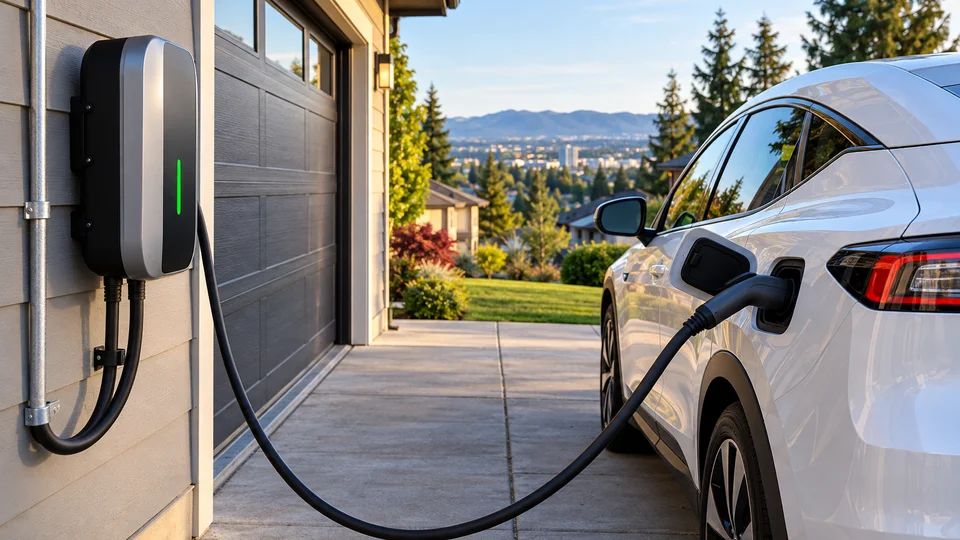
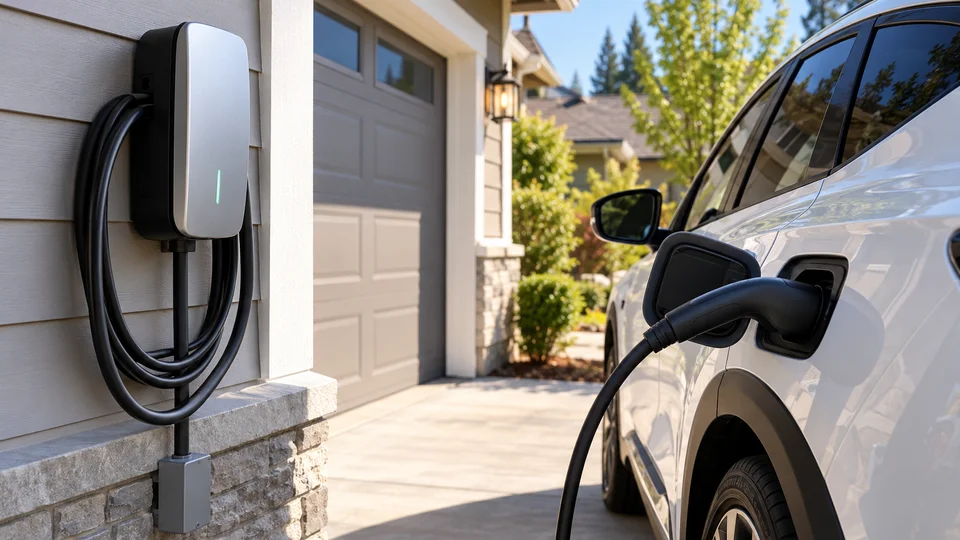
Level 2 240V charging station delivering 48A high-speed continuous charging in Spokane residential garage.

The Sub-Zero Failure of Level 1 in Eastern Washington

While a 120-volt Level 1 charger may provide acceptable range recovery in mild climates, it fails in a Spokane winter:

  • ✓
    1,500W–4,000W Heater Draw: When temperatures at Felts Field drop below 15°F, the vehicle's BMS diverts power to internal coolant heaters simply to keep battery cells from freezing.
  • ✓
    Zero Net Range Added: Because a 120V outlet only provides 1,440 watts total, 100% of incoming electricity is consumed by thermal loops, leaving zero net kilowatt-hours to recharge the battery.

The 240V Level 2 Solution

Installing a dedicated 240-volt Level 2 circuit transforms your daily driving routine:

  • ✓
    Full Overnight Recharging: 7.7 kW to 11.5 kW output powers through sub-zero battery heaters while simultaneously topping off your battery pack in 6 to 9 hours.
  • ✓
    Preconditioning on Grid Power: Scheduled departure warms the passenger cabin to 72°F using utility power, saving 100% of battery range for winter road conditions.

Electrical Service Capacity & Panel Auditing (NEC Article 220)

Before purchasing an EV charger or running conduit, your home's main electrical service must be evaluated to confirm it can safely support an additional 32-amp to 48-amp continuous electrical load under NEC Article 220.

Spokane Housing Stock Electrical Profiles

Spokane County features diverse residential electrical capacities across its historic, mid-century, and modern neighborhoods:

1900 – 1945 • Historic Era Browne's Addition • South Hill • Peace Valley
Service Capacity 60A or 100A Fuse Box / Vintage Split-Bus
Branch Wiring Ungrounded Knob-and-Tube or Cloth Romex
Status: Zero spare capacity — mandates a comprehensive 200A panel modernization.
1950 – 1979 • Mid-Century Ranchers Shadle Park • Garland • Spokane Valley
Service Capacity 100A or 125A Main Breaker Panel
Electrical Load Constrained with Central AC & Dryer
Solution: DCC-9 smart EV load manager or 200A panel upgrade avoids service trenching.
1980 – Present • Modern Era Five Mile Prairie • Southgate • Liberty Lake
Service Capacity 200A or 400A Modern Distribution Panel
EV Readiness Generous Spare Capacity on Main Bus
Status: Ready for high-speed 60A circuit / 48A continuous charging installation.
Spokane electrician conducting NEC Article 220 whole-home electrical panel load calculation
Licensed master electrician inspecting 200A main service entrance and performing formal NEC 220 load study.

The NEC Article 220 Calculation Process

Contractors calculate whole-home electrical demand using formal code calculation formulas:

  • ✓
    General Lighting Load: 3 volt-amps (VA) per square foot of living space.
  • ✓
    Small Appliance & Laundry: 1,500 VA for each kitchen small-appliance circuit and laundry branch.
  • ✓
    Specialized Appliance Loads: Nameplate wattage of heat pumps, AC compressors, water heaters, and ranges.

The 125% Continuous EVSE Addition

Accounting for continuous draw under National Electrical Code Article 625:

  • ✓
    Zero Diversity Deductions: The continuous rating of the charger is multiplied by 125% (48A x 240V x 1.25 = 14,400 VA) and added directly to total load.
  • ✓
    Smart Load Shedding Alternatives: If demand exceeds 80% service capacity, installing a DCC-9 smart energy manager avoids multi-thousand dollar utility service replacements.

Hardwired vs. Plug-In NEMA 14-50: The Electrician's Recommendation

When designing your home installation, you must choose between permanently hardwiring your charging station or installing an industrial 240-volt NEMA 14-50 plug-in receptacle.

Installation Architecture Comparison

Hardwiring connects high-gauge copper conductors directly to the internal terminal lugs of the EVSE, eliminating mechanical plug blades, GFCI breaker conflicts, and thermal resistance points.

Alternative Option

Plug-In NEMA 14-50

Receptacle outlet with detachable charging plug

1
Main Service Panel 50A dual-pole GFCI breaker mandatory ($130–$180)
2
Wiring Run #6 AWG Copper Romex (NM-B capped at 55A / 60°C)
3
Industrial Hubbell HBL9450A Receptacle Heavy-duty commercial brass contacts
4
Portable Plug-In EVSE
  • Capped at 40A Max (9.6 kW) — 30 miles/hr
  • Risk of Dual-GFCI Clash & false tripping
  • Mechanical wear points on plug blades
Hardwired 48A continuous duty EV charger connection vs industrial NEMA 14-50 receptacle
Hardwired 48A charging station terminal connection torqued to manufacturer specifications.

4 Reasons Electricians Prefer Hardwiring in Spokane

  • ✓
    Higher Charging Speed: Hardwired stations support up to 48 amps continuous (11.5 kW) on a 60A breaker (40–46 mph), whereas plug-in NEMA 14-50 circuits are legally capped at 40 amps continuous (9.6 kW) on a 50A breaker.
  • ✓
    Exemption from 2023 NEC 210.8 GFCI Rules: 240V garage receptacles mandate expensive GFCI breakers ($130–$180) that clash with the charger's internal GFCI circuitry, causing nuisance overnight tripping. Hardwired units bypass this rule completely.

Melt-Proof Safety & Weather Sealing

  • ✓
    Melt-Proof Safety: Eliminates plug blades and socket leaves, torquing copper conductors directly to the terminal block to remove the risk of melted plastic consumer-grade receptacles.
  • ✓
    Superior Winter Sealing: A hardwired unit seals directly to liquid-tight conduit, achieving a watertight NEMA 4X rating against Spokane's blowing snow, freezing rain, and garage condensation.

Optimal Mounting Locations: Garage, Driveway, & Detached Structures

Selecting where to mount your home EV charger dictates your daily convenience, installation labor costs, and environmental protection across Spokane's seasonal climate.

Mounting Location Conduit Route Profile & Distance Weather Exposure & Protection Level Key Technical Considerations
Attached Garage (Interior Wall) Short run (5 - 25 ft); surface EMT conduit or inside open wall studs Fully sheltered; protected from snow, ice dams, and sub-zero direct winds Mount on garage sidewall 48" high; position cable to reach both front and rear charge ports
Exterior Driveway Wall (Parking Pad) Moderate (20 - 50 ft); exterior EMT conduit, foundation core drill Exposed to freezing snowpack, ice dams, and summer UV thermal cycling Mandates NEMA 4X enclosure rating; ultra-flexible -40°F TPE cord; protective weather hood
Free-Standing Pedestal (Carport/Yard) Long (30 - 80 ft); underground trenching under lawn or asphalt driveway Fully exposed to vehicle movement and winter snow removal plows Schedule 80 PVC conduit; poured concrete footing; steel crash bollard protection
Detached Garage / Carriage House Long (50 - 200 ft); underground trenching through basalt bedrock Unheated structure; subjected to severe winter cold-soaking Voltage drop conductor up-sizing; 4-wire subpanel; dual 8-foot copper ground rods

Cable Reach & Parking Placement Strategy

Before finalizing your charger's mounting position, park your vehicle in its normal overnight spot and verify charge port positioning:

  • ✓
    Tesla Vehicles: Driver's side rear corner.
  • ✓
    Ford, Chevrolet, Rivian: Driver's side front fender.
  • ✓
    Audi, Porsche, Hyundai: Passenger side rear or front corner.
  • ✓
    Central Garage Mounting: Standard 24-foot cables mounted centrally between two bays allow charging two cars without maneuvering or parking in reverse.
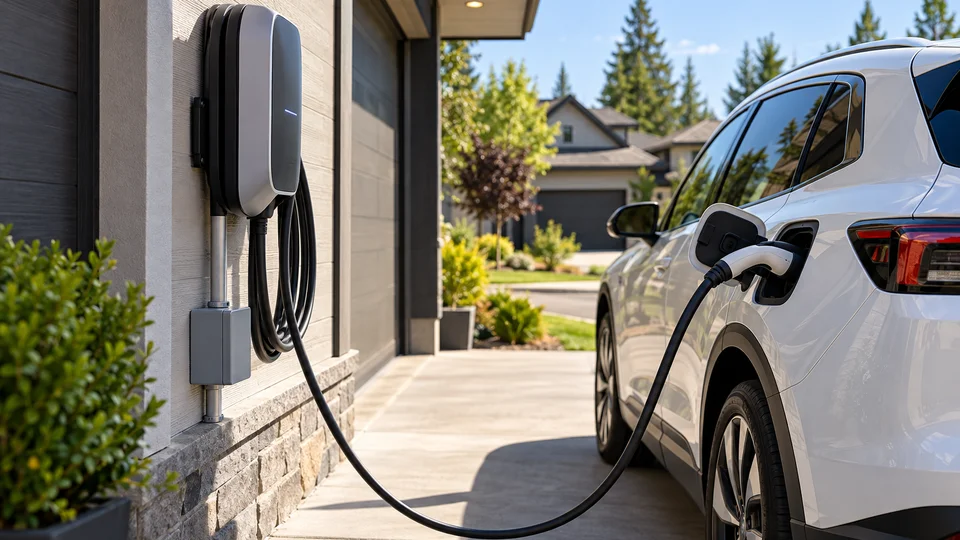
Electric vehicle charging station mounted on central residential garage wall in Spokane
Central wall mounting between garage bays providing 24-foot cable reach for front and rear port vehicles.

Sizing Breakers, Conductors, & Conduit (The 125% Rule)

Because electric vehicle supply equipment operates continuously under NEC Article 625, overcurrent protection devices and branch circuit conductors must be sized at not less than 125% of the continuous electrical load.

Max Output (kW) Continuous Draw Required Breaker Min. Romex Gauge Min. THHN Conduit Ga. Range Added / Hr
3.8 kW 16 Amps 20A 2-Pole #12 AWG Cu #12 AWG Cu 12 - 15 mph
5.7 kW 24 Amps 30A 2-Pole #10 AWG Cu #10 AWG Cu 18 - 22 mph
7.7 kW 32 Amps 40A 2-Pole #8 AWG Cu #8 AWG Cu 25 - 32 mph
9.6 kW 40 Amps 50A 2-Pole #6 AWG Cu #8 AWG Cu* 30 - 38 mph
11.5 kW 48 Amps 60A 2-Pole #4 AWG Cu** #6 AWG Cu 40 - 46 mph

*Breaker terminals rated for 75°C limit #8 THHN to 50A maximum.
**Critical Spokane Code Note: Under NEC 334.80, #6 Romex is limited to 60°C column (55A max), making it illegal on 60A breakers. You must install #4 Romex or #6 THHN in conduit.

Dedicated 60-amp two-pole circuit breaker and high-gauge copper conductors in EMT conduit
Dedicated 60A two-pole circuit breaker wired with #6 THHN stranded copper conductors in metallic conduit.

Conduit vs Romex Routing in Garages

Washington State electrical inspectors enforce strict physical protection standards for residential wiring:

  • ✓
    EMT Conduit Protection: Required wherever wiring is surface-mounted on finished drywall or exposed to physical damage below 8 feet from the floor.
  • ✓
    Superior Thermal Dissipation: Individual THHN copper conductors pulled through EMT metal conduit dissipate heat far more effectively than vinyl-sheathed multi-conductor cables.

Torque Specifications & Arcing Prevention

Proper terminal torquing is the single most critical safety factor in continuous duty electrical installations:

  • ✓
    Calibrated Torque Screwdrivers: Under NEC 110.14(D), electricians must use calibrated torque tools to achieve exact manufacturer inch-pound specifications.
  • ✓
    Eliminating Thermal Expansion Loose Screws: Undertorqued terminals loosen over thousands of thermal cycles, creating high-resistance arcing and electrical fires.

Avista Utilities Rebates, Incentives, & Time-of-Use Off-Peak Economics

Homeowners in Spokane County can substantially offset their upfront installation investment through Avista Utilities Electric Transportation Incentives (Schedule 77).

Incentive Program Tier Maximum Rebate Amount Qualifying Hardware Contractor & Permitting Requirement
Standard Residential Level 2 Rebate Up to $500 (Equipment & Installation) ENERGY STAR certified smart, Wi-Fi connected EVSE Licensed WA (01/02) electrical contractor; finalized municipal permit
Income-Qualified Residential Incentive Up to $1,000 (or 100% of installation cost) Approved smart Level 2 hardware package Licensed electrical contractor; finalized municipal inspection tag
Operating Economics

The Power of Off-Peak Residential Rates

Avista supplies electricity to Spokane homes at an average residential rate of approximately 11.5¢ to 12.8¢ per kilowatt-hour:

  • ✓
    $6.30 Full Charge: Recharging a standard 75 kWh battery from 10% to 80% costs approximately $6.30, providing ~220 miles of driving range.
  • ✓
    $35.20 Gasoline Cost: Driving those same 220 miles in a 25-mpg gasoline vehicle at $4.00/gal costs over $35.20.
Annual Savings

$1,200 to $1,600 Annual Fuel Savings

The average Spokane commuter saves over $1,200 annually, paying off the home EV charger installation in less than two years:

  • ✓
    Automated Midnight Charging: Smart chargers automatically delay charging until off-peak hours when the grid is cleanest and least constrained.
  • ✓
    Turnkey Rebate Paperwork: Our licensed electricians provide the complete signed municipal inspection certificate required for immediate Avista payout.

Spokane Winter Climate Engineering: Overcoming Sub-Zero Freezes

Spokane's winter environment demands cold-weather engineering for residential charging hardware. Official weather records from NOAA Felts Field document that Spokane experiences regular overnight lows dipping to -5°F to 15°F, with arctic blasts dropping below -15°F.

Spokane Winter Residential Charging Protocols

Reliable cold-weather charging requires dedicated high-power hardware capable of simultaneously warming battery cells and passenger cabins while fighting freezing precipitation.

01

Scheduled Departure Battery Preconditioning

Avista Grid-Powered

Set vehicle smartphone app to complete charging 15 minutes before your morning commute. The charger draws power directly from the utility grid to preheat battery cells to 55°F and warm the passenger cabin to 72°F, preserving 100% of battery range for winter road conditions.

02

Ultra-Flexible Cold-Rated TPE Cables (-40°F)

Sub-Zero Anti-Cracking

Mandate an EVSE equipped with genuine Thermoplastic Elastomer (TPE) jacketing (e.g., Tesla Wall Connector or ChargePoint Home Flex). Low-grade PVC cords turn into rigid, unyielding rods below freezing and easily crack when coiled in unheated garages.

03

Conduit Expansion Slip Joints (NEC 352.44)

Spokane Frost-Line Compliance

On exterior Schedule 80 PVC conduit runs emerging from Spokane's 24-inch frost depth, install telescoping expansion slip fittings to accommodate soil heave and seasonal thermal expansion without cracking junction boxes or shearing conductors.

Home EV charger powering winter battery preconditioning and cabin warming in freezing Spokane weather
Level 2 charger powering sub-zero cabin preconditioning and battery warming during freezing Spokane winter storm.

Scheduled Departure Preconditioning

Preconditioning your vehicle while connected to a 48A home station protects driving performance:

  • ✓
    Full Range Preservation: Drawing 7 kW to 11 kW directly from the grid warms the battery pack to its optimal 55°F operating temperature without using a single kilowatt-hour of onboard battery capacity.
  • ✓
    Instant Defrost: Melt windshield ice and warm the cabin to 72°F before you step outside into Spokane snow.

Cold-Rated Hardware Selection

Hardware durability specifications engineered for Eastern Washington winters:

  • ✓
    Thermoplastic Elastomer (TPE) Cables: Premium units feature TPE cords that remain flexible at -40°F, preventing stiff cable coils and charge port strain.
  • ✓
    NEMA 4 / 4X Enclosure Rating: Full protection against blowing ice dams, freezing condensation, and corrosive road de-icing salts tracked into residential garages.

Permitting Jurisdictions: City of Spokane, Spokane Valley, & WA L&I

In Spokane County, installing a residential 240-volt EV charging circuit legally requires securing an electrical permit and passing an in-person physical inspection before the circuit is energized.

Municipal Jurisdiction Permitting Office Location Building Standard Enforcement Core Residential Inspection Focus
City of Spokane (Incorporated Limits) Development Services Center (808 W Spokane Falls Blvd) Spokane Municipal Code SMC 17F.050.020 Conductor ampacity match; calibrated torque audit; GFCI on receptacles
City of Spokane Valley (Incorporated) Permit Center (10210 E Sprague Ave) Spokane Valley Municipal Code Panel bus stab connection; conduit straps; grounding electrode conductor
Unincorporated County (Mead, Colbert, Nine Mile) Washington State L&I (901 N Monroe St Suite 100) Washington State WAC 296-46B WAC 296-46B amendments; whole-home load calculation worksheet verification

Washington State RCW 19.28 Legal Mandate

Under Washington State law (RCW 19.28), unpermitted electrical work can result in municipal stop-work orders, utility disconnects, and denied insurance claims if an electrical fire occurs.

Licensed electrical contractors handle all permit filings and coordinate on-site municipal inspections as part of a turnkey installation.

The Official Green Approval Tag

Passing municipal inspection provides critical benefits for Spokane homeowners:

  • ✓
    Utility Rebate Sign-Off: Avista Schedule 77 rebates require a copy of the finalized inspection certificate.
  • ✓
    Home Resale Value: Documented permitted electrical installations protect property value and eliminate buyer inspection hurdles.

Turnkey Installation Process: What to Expect from an Electrician

A professional residential EV charger installation follows an orderly, five-phase engineering roadmap to guarantee code compliance, property protection, and optimal performance:

1

On-Site Electrical Assessment & Load Study

The electrician evaluates your main service entrance, calculates whole-home loads under NEC Article 220, inspects physical routing pathways, and tests garage Wi-Fi signal strength.

2

Permitting & Regulatory Filing

The contractor files permit documentation with the City of Spokane Development Services, Spokane Valley, or WA L&I, specifying circuit parameters and conductor temperature ratings.

3

Physical Conduit Rough-In & Conductor Pull

Installing surface-mounted metallic EMT conduit inside the garage, pulling stranded copper conductors, and seating a dedicated two-pole circuit breaker in the distribution panel.

4

Precision Terminal Torquing & App Pairing

Anchoring the EVSE backplate to wall studs, tightening terminal screws to manufacturer inch-pound specs with an insulated torque tool, and pairing the charger with your home Wi-Fi network.

5

Municipal Inspection & Avista Rebate Handoff

An electrical inspector inspects the installation, issues the official green approval certificate, and the contractor provides finalized documentation for your Avista Schedule 77 rebate claim.

Licensed electrical contractor completing turnkey residential EV charger installation in Spokane
Licensed electrical contractor completing terminal connections and Wi-Fi commissioning for home EV charger.

Complete Cost Breakdown: Home EV Charger Installation in Spokane

Transparent, real-world pricing expectations across Spokane County based on conduit run distance, panel capacity, and structural routing requirements:

Installation Scope / Tier Typical Cost Range Detailed Material & Labor Specifications
Basic Short-Run Installation $750 - $1,200 turnkey Main panel located inside attached garage (< 10 ft); 60A breaker, EMT conduit, #6 THHN copper
Standard Garage Installation $1,100 - $1,800 turnkey 20 to 50 ft conduit run through garage; hardwired 48A station, permit fees, complete labor
Complex Across-Home Run $1,800 - $2,900 turnkey 75 to 125 ft routing through basement or attic crawlspaces; #4 copper wire up-sizing
Detached Garage with Trenching $2,800 - $5,500+ turnkey 50 to 100 ft underground trenching across yard; Schedule 80 PVC, outbuilding subpanel, ground rods
Main Service Panel Upgrade $2,800 - $4,500 turnkey Upgrading aged 100A panel to 200A service; new meter base, ground rods, Avista utility coordination
Smart Energy Load Shedding Device $1,200 - $1,800 installed DCC-9 or smart load shed controller; avoids multi-thousand dollar utility service upgrade
Rebate Recovery

Net Investment After Utility Incentives

With Avista Schedule 77 rebates covering up to $500 to $1,000 of equipment and installation labor, a standard residential installation often has a net out-of-pocket investment of just $600 to $1,300.

Tax Credit

Federal Section 30C Tax Credit

Property owners in qualifying Spokane County census tracts can claim an additional 30% federal tax credit on hardware and installation costs, further reducing your total project investment.

Top Smart EV Charger Models for Spokane Homes

Our certified electricians recommend high-performance Level 2 stations featuring ENERGY STAR certification, -40°F flexible cables, and Avista Schedule 77 rebate compatibility:

Charger Brand & Model Maximum Power Output Connectivity & App Key Spokane Advantage
Tesla Universal Wall Connector 48A Hardwired (11.5 kW) 2.4 GHz Wi-Fi, BLE; Tesla App Integrated Magic Dock charges both NACS & J1772 vehicles natively
ChargePoint Home Flex 50A Hardwired / 40A Plug-In Wi-Fi, Bluetooth; ChargePoint App Ultra-flexible -40°F cold rubber cable; auto-syncs with Avista rates
Emporia Smart EVSE 48A Hardwired / 40A Plug-In 2.4 GHz Wi-Fi; Emporia Energy App Best value smart charger; pairs with Emporia Vue for dynamic load shedding
Wallbox Pulsar Plus 48A Hardwired / 40A Plug-In Wi-Fi, Bluetooth; myWallbox App Extremely compact; built-in multi-vehicle power sharing capability
Top smart Level 2 home EV charger models with Wi-Fi scheduling and Avista rebate compatibility
Top smart connected Level 2 charging stations engineered for Spokane homes and Avista rebates.

Critical Homeowner Pre-Installation Checklist

Before your electrical contractor arrives on site, completing these five straightforward preparation steps ensures an efficient, seamless installation:

Preparation Action Item Practical Verification Step for Spokane Homeowners
1. Locate Main Electrical Panel Clear a 36-inch clearance zone in front of your electrical panel (often in basement or garage) per NEC working space requirements.
2. Identify Charge Port Location Confirm whether your car charges on driver's side front, rear, or passenger side to plan optimal conduit routing and cord reach.
3. Check Garage Wi-Fi Signal Strength Stand at the planned mounting spot with your smartphone; confirm at least 2 bars of 2.4 GHz Wi-Fi connectivity for smart telemetry.
4. Gather Avista Electric Account Info Have your Avista electric bill handy to confirm service address and prepare for immediate Schedule 77 rebate filing.
5. Verify Electrical Contractor Licensing Check contractor on WA L&I Verify website to confirm active (01) General Electrical license, bond, and insurance.

Troubleshooting Common Home Charging Issues

If your residential EV charger is experiencing operational glitches, licensed specialists can diagnose and rectify the most common system failures:

Midnight Trip

Charger Stops Mid-Night

Check vehicle scheduled departure settings and Avista off-peak windows. If the breaker tripped, audit for dual-GFCI breaker clashes (NEC 210.8) or undertorqued terminal lugs inside the panel.

  • ✓
    Symptom: Car stops charging at 2:00 AM unprompted.
  • ✓
    Fix: Replace nuisance GFCI with hardwired terminal connection.
Thermal Throttling

Speed Drops from 48A to 24A

The EVSE internal thermistor detects elevated temperatures inside the wall box, or your smart load manager is actively throttling charging to protect the main electrical panel from overload.

  • ✓
    Symptom: Charging speed drops by half during heat or appliance use.
  • ✓
    Fix: Calibrated torque audit and terminal lug re-tightening.
Wi-Fi & Freeze

App Offline / Frozen Port Seam

Garages suffer from weak 2.4 GHz signal resolved with a garage Wi-Fi mesh node. For frozen charge ports in sub-zero Spokane weather, activate app preconditioning or apply a warm cloth seam.

  • ✓
    Symptom: App disconnected or charge door frozen shut.
  • ✓
    Fix: Install mesh node; precondition via smartphone.

Frequently Asked Questions: Spokane Home EV Charging

Clear, authoritative guidance from licensed Washington (01) electricians regarding residential Level 2 charging, panel capacity, and Avista rebates.

Need On-Site Electrical Guidance?

Speak directly with a licensed Spokane master electrician about panel capacity, hardwiring vs plug-in options, and Avista rebates.

Direct Master Electrician Hotline
(509) 800-4136
Operating Hours: Monday – Friday: 7:00 AM – 6:00 PM
Weekend Emergency Service: By Appointment
License: WA #EC-SPOKEV*821JA
Schedule Free Home Assessment
Can any licensed electrician in Spokane install an EV charger? +
Yes, any licensed Washington State (01) General or (02) Residential electrical contractor can legally install an EV charger. However, choosing an electrician specializing in EVSE installations ensures adherence to continuous load engineering (NEC 625), knowledge of regional Avista rebates, and expertise in dynamic load management devices.
How much driving range does a Level 2 home charger add per hour? +
A standard 32-amp Level 2 charger adds approximately 25 to 30 miles of range per hour, a 40-amp charger adds 30 to 36 miles per hour, and a 48-amp hardwired charger adds 40 to 46 miles per hour, fully replenishing an empty battery in 6 to 9 hours overnight.
Do I need to upgrade my electrical panel to 200 amps? +
Not necessarily. While a 200-amp panel easily supports high-powered Level 2 charging, homes with 100-amp or 125-amp service can often utilize smart dynamic load management systems (such as a DCC-9 or Wallbox Power Meter) to charge safely without an expensive service panel upgrade.
How long does a standard home EV charger installation take? +
A standard residential installation where the electrical panel is located in the garage typically takes 3 to 5 hours. Complex installations involving attic wire pulls, crawlspace routing, service panel upgrades, or outdoor trenching require 1 to 2 full workdays.
Does Avista require a smart connected charger to qualify for rebates? +
Yes. Under Avista Utilities Schedule 77, qualifying residential charging stations must be ENERGY STAR certified and feature Wi-Fi or cellular connectivity to report energy telemetry and support off-peak charging programs.
Will installing a home charger void my vehicle's battery warranty? +
No. All major automotive manufacturers design their electric vehicles to charge from standardized, UL-listed Level 2 charging stations complying with SAE J1772 or NACS standards.
• TURNKEY RESIDENTIAL CHARGING SOLUTIONS

Connect with Licensed Spokane Home EV Installation Specialists Today

Investing in a dedicated home electric vehicle charging station in Spokane delivers unmatched daily convenience, massive fuel savings, and reliable sub-zero winter performance. Ensuring your installation is engineered for continuous high-power safety, properly permitted under local municipal codes, and fully optimized for Avista utility rebates requires experienced tradespeople committed to excellence.

Request Your In-Home Panel & EVSE Assessment

Serving City of Spokane, Spokane Valley, South Hill, Five Mile Prairie, Liberty Lake, Mead, Colbert, Cheney, and Medical Lake.

Spokane EV Charging Specialists · Washington (01) General Electrical Contractor License · Fully Bonded & Insured · Lic #EC-SPOKEV*821JA
Direct Inquiries & Master Electrician Dispatch: +1 509 800 4136