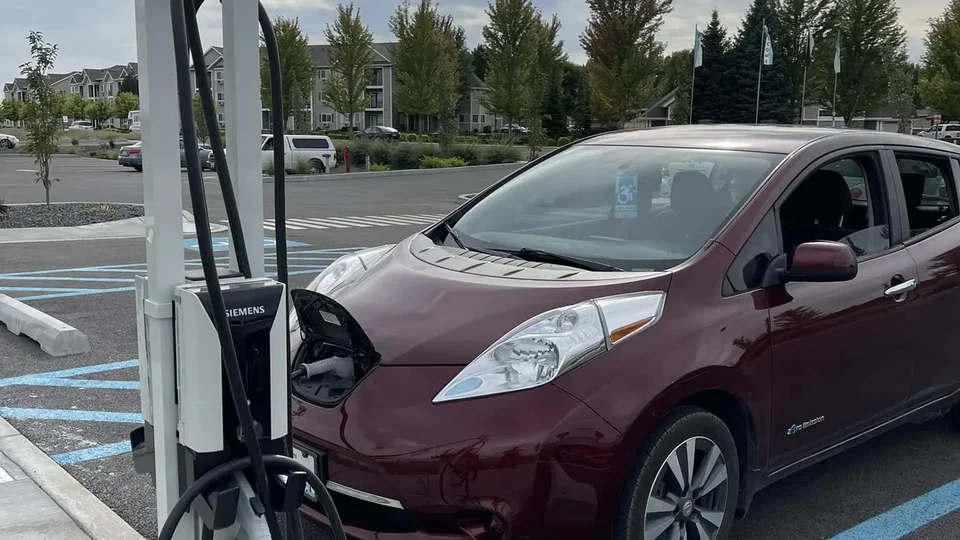
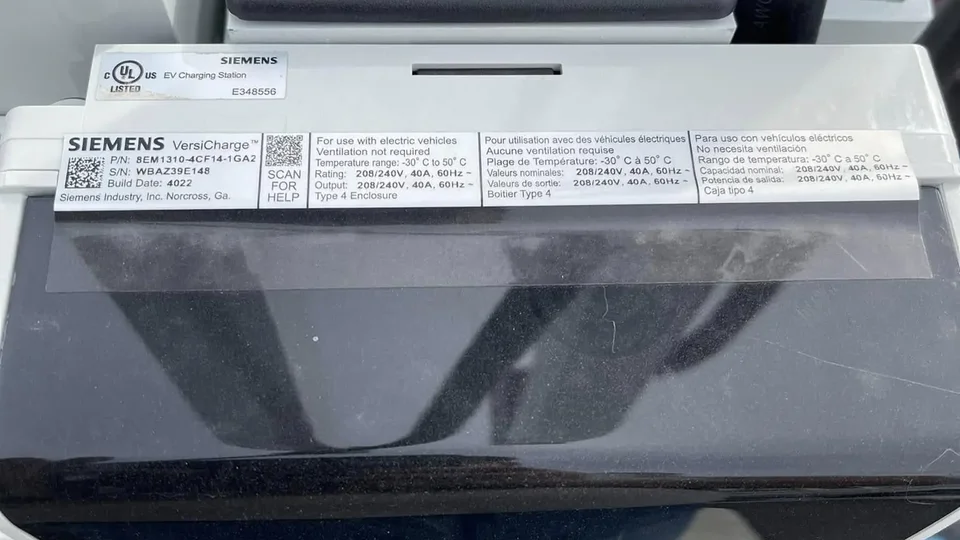
Professional 240-volt 50-amp dedicated branch circuit wiring for Level 2 EV charging. Heavy #6 AWG pure copper conductors, commercial-grade Hubbell HBL9450A receptacles, 75 in-lb calibrated torque, and turnkey City of Spokane & WA L&I electrical permits.
Fast industrial receptacle & 240V 50A circuit quote for Greater Spokane.
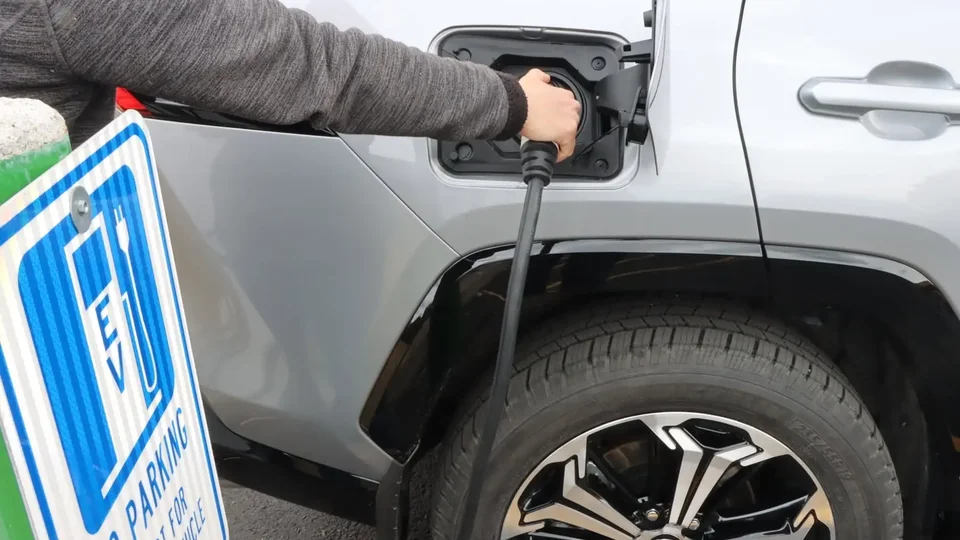
Across Spokane, Spokane Valley, and Liberty Lake, the NEMA 14-50 receptacle is the most widely recognized electrical connection for residential Level 2 charging. Featuring a 4-prong configuration delivering 240-volt, 50-amp power, it provides seamless plug-and-play versatility for mobile charging cords, RV hookups, and dual-purpose workshops.
A NEMA 14-50 outlet is not an EV charger itself; it is a standardized high-capacity electrical receptacle. It features four distinct electrical conductors: two 120V ungrounded hot legs providing 240V split-phase power, one grounded neutral wire, and one equipment grounding conductor.
Because EV charging draws high current for 6 to 10 hours continuously, an EV outlet endures immense thermal stress. Under National Electrical Code (NEC Article 625), a 50-amp circuit can safely sustain 80% continuous load, translating to 40 amps (9.6 kW) of continuous charging velocity—recovering 28 to 32 miles of driving range per hour.
A residential clothes dryer only draws 24 amps intermittently for 30 minutes, allowing components to cool down between cycles. In contrast, an EV charger pulls 32 to 40 amps uninterrupted all night long. This relentless thermal cycling demands heavy-gauge copper conductors, industrial-grade receptacle metallurgy, and certified torque calibration to prevent catastrophic overheating.
Spokane EV Charging Specialists provides turnkey 14-50 installations under Washington Electrical Contractor License #EC-SPOKEV*821JA. We calculate panel demand under NEC Article 220, install heavy #6 THHN copper wire, wire commercial-grade Hubbell sockets, and guarantee final municipal green tag inspection sign-off.
The leading cause of residential EV electrical fires in Washington State is the failure of cheap $15 builder-grade 14-50 outlets. Below is a side-by-side engineering comparison revealing why hardware quality is paramount:
| Engineering Specification | Industrial Hubbell / Bryant (HBL9450A) | Builder-Grade Receptacle (Standard Leviton) | Safety & Reliability Impact |
|---|---|---|---|
| Target Operational Duty | Heavy Industrial Continuous Duty (100% Load) | Residential Intermittent Duty (Clothes Dryers) | Dryer outlets fail when subjected to 8-hour continuous EV charging. |
| Internal Contact Mechanism | Massive Solid Copper-Alloy Clamp Jaws | Thin Stamped-Brass Split Leaf Springs | Hubbell clamps blades with high pressure; stamped brass loses spring tension. |
| Body & Housing Material | Glass-Reinforced Thermoplastic (300°F+ Rating) | Standard Molded Nylon (Melts at ~180°F) | Hubbell withstands extreme localized heat without plastic deformation. |
| Terminal Clamping Torque Rating | 75 Inch-Pounds (Certified Screw Lug) | 20 – 25 Inch-Pounds (Standard Screws) | High torque prevents thermal expansion loosening and contact resistance. |
| Wire Gauge Compatibility | Accepts #10 to #4 AWG Copper Wire cleanly | Struggles to fit #6 AWG stranded copper | Hubbell terminal lugs accommodate heavy #6 and #4 copper conductors effortlessly. |
| Continuous 40A Heat Generation | Low (<30°C temperature rise) | Severe (>90°C thermal runaway) | Builder-grade outlets can scorch surrounding drywall studs and ignite fires. |
| Hardware Component Cost | $75 – $95 (Commercial Wholesale) | $12 – $18 (Home Improvement Box Store) | Spokane EV Charging Specialists exclusively installs Hubbell/Bryant hardware. |
| Spokane Municipal Inspection | 100% Approved by City & State Inspectors | Scrutinized for EV continuous duty compliance | Inspectors recognize industrial receptacles as the gold standard of fire safety. |
Heat generation in an electrical connection scales with the square of current multiplied by resistance (\(Q = I^2 \cdot R \cdot t\)). When a cheap outlet's brass contacts relax from thermal cycling, electrical resistance (\(R\)) increases. At 40 continuous amperes (\(I^2 = 1,600\)), localized heat skyrockets past 400°F, melting the plastic casing and welding plug prongs to the socket.
We refuse to install cut-rate $15 residential outlets for EV charging. Every NEMA 14-50 receptacle installed by Spokane EV Charging Specialists is a commercial-grade Bryant 9450FR or Hubbell HBL9450A, seated in an oversized steel 2-gang junction box and torqued with digital calibration tools to 75 inch-pounds.
Selecting the correct wire gauge, conductor metallurgy, and conduit raceway prevents voltage drop across long garage runs and guarantees your 50A circuit meets strict Washington State electrical standards:
Under NEC Table 310.16, #6 AWG THHN copper inside conduit carries an ampacity of 65A at 75°C, providing ample thermal headroom for a 50A breaker.
While aluminum wire is cheaper, its high thermal expansion rate causes loose terminals under continuous cycling, leading to arcing.
In garages where vehicles park, NEC Article 300.4 requires electrical wiring subject to physical damage to be protected by robust conduit.
A dedicated NEMA 14-50 branch circuit requires a two-pole 50-amp circuit breaker occupying two adjacent 120V bus stabs in your service panel to supply 240V power.
To ensure complete mechanical and electrical safety, the circuit breaker brand must match your electrical panel manufacturer (Square D QO, Square D Homeline, Eaton BR/CH, or Siemens QP). Installing mismatched breaker types voids panel UL listing, violates NEC 110.3(B), and results in an immediate municipal inspection failure.
Washington State enforces the 2023 National Electrical Code. One of the most significant changes affecting EV outlet installations is the mandatory requirement for upstream GFCI protection:
NEC Article 210.8(A) requires all 240-volt receptacles installed in residential garages, accessory buildings, carports, and outdoor locations to be protected by a GFCI breaker.
Because 240V NEMA 14-50 receptacles do not have built-in GFCI buttons like standard 120V bathroom outlets, the GFCI mechanism must be located in the main panel breaker ($150–$250).
Smart EV chargers contain their own internal ground-fault monitors. In some setups, the charger's diagnostic self-test can clash with the panel's GFCI breaker, causing nuisance trips.
City of Spokane and WA L&I inspectors strictly test for GFCI trip compliance on every new 14-50 outlet. Installing a standard non-GFCI breaker will fail inspection immediately.
If you want to avoid purchasing a costly $200 GFCI circuit breaker and eliminate any potential for dual-GFCI nuisance tripping, permanent hardwiring is your solution.
Under NEC 625.54, hardwired EV chargers are legally exempt from upstream GFCI circuit breaker requirements because the charging station itself provides UL-listed Class A personnel protection. However, if you choose a plug-in NEMA 14-50 configuration, Spokane EV Charging Specialists guarantees fully compliant, code-certified GFCI breaker integration.
Proper mechanical positioning of your NEMA 14-50 outlet ensures effortless daily plug-in, prevents cord strain, and protects electrical connections during snowy Spokane winters:
Mounting the 14-50 outlet between 36 and 48 inches above the garage floor keeps the plug at a comfortable waist level, eliminating awkward bending.
Vehicle charge port locations vary: Tesla is left-rear; Ford Lightning & Rivian are front-left; European EVs (Audi/Porsche) are front-fender or right-rear.
Most EV mobile charging cords feature a heavy 90-degree downward-pointing plug. Installing the ground hole on TOP ensures the cord hangs straight down.
In older Spokane neighborhoods like Browne's Addition, South Hill, and Emerson-Garfield, detached garages often feature unfinished 2x4 framing, uninsulated walls, and exposed electrical panels.
In newer developments across Five Mile Prairie and Liberty Lake, attached garages typically feature fully finished, fire-rated drywall. Our master electricians specialize in both configurations: installing clean surface-mounted metallic EMT conduit on finished drywall or threading high-capacity copper cables through exposed stud cavities without damaging your home's structural integrity.
Many rural and suburban homes across Spokane County have existing 240V receptacles in shops, basements, or garages. Here is what is legally required to convert them for safe EV charging:
Common 240V 50A 3-prong welder socket featuring two hot legs and a ground, but no neutral wire.
Pre-1996 3-prong ungrounded socket utilizing two hots and a shared neutral, but no dedicated equipment ground.
Existing 50A 4-prong RV pedestal or garage wall socket with two hots, neutral, and ground.
Never plug an electric vehicle into an existing 240V socket without a professional inspection. Outlets installed a decade ago for an occasional RV trip or welder project were never engineered for 8 hours of continuous daily electrical current.
Spokane EV Charging Specialists provides comprehensive outlet safety audits. We open existing boxes, inspect conductor insulation for heat degradation, verify wire gauge (#6 AWG copper vs. undersized wire), replace fatigued sockets with industrial Hubbell hardware, and install code-mandated GFCI breakers.
Our end-to-end installation workflow delivers guaranteed code compliance, zero property damage, and complete peace of mind:
Master electrician calculates main panel capacity to ensure your home safely supports 50-amp branch circuit addition.
We digitally submit plans to the City of Spokane or WA L&I under our contractor license (#EC-SPOKEV*821JA).
We install rigid EMT or PVC conduit and pull 4-conductor #6 AWG THHN pure copper wire to the designated garage location.
Commercial Hubbell 14-50 socket is secured in a 2-gang steel box; terminals are torqued to 75 in-lbs with ground pin UP.
We coordinate and manage the municipal inspector walkthrough, testing GFCI breaker tripping and ground continuity.
Official green inspection sticker is applied to your panel. We provide digital documentation for Avista Schedule 77 rebates.
Before we sign off on your new NEMA 14-50 installation, our electricians perform live thermal and electrical load testing. We plug in a calibrated Level 2 EVSE, initiate 40-amp continuous charging, and monitor voltage drop across both 120V legs.
Using an infrared thermal imaging camera, we verify that temperature rise at the breaker lugs, conduit couplings, and receptacle terminals remains well within safe operational thresholds. You receive a fully verified, bulletproof electrical installation.
Every installation proposal from Spokane EV Charging Specialists is a transparent, flat-rate quote with zero hidden surcharges:
Outlet mounted on the same wall within 5 to 10 feet of your main electrical service panel.
Running conduit overhead across garage rafters or finished ceiling to the opposite vehicle bay.
Extended conduit runs exceeding 50 feet, trenching to detached garages, or subpanel expansion.
Expert electrical answers to common questions about 240V 50A NEMA 14-50 outlet installations in Spokane, WA.
📞 Speak with a Master Electrician